
Responsible Gambling at Memo Casino: Your Guide to Safer Play
Gambling can be an enjoyable form of entertainment when approached with awareness, clear boundaries, and a level head. At Memo Casino, we believe that access to honest, practical safer gambling information is just as important as any casino review or bonus guide we publish. This page exists not as a regulatory formality, but as a genuine resource for anyone who wants to keep gambling fun, manageable, and free from harm.
The UK has one of the most robust regulatory frameworks for gambling in the world, and we are proud to align ourselves with the standards set by the UK Gambling Commission. Whether you visit our platform regularly or occasionally, we encourage you to read through this guide and reflect honestly on your relationship with gambling. Safer gambling is not about restricting enjoyment — it is about making informed choices that protect your wellbeing over the long term.
This page covers everything from recognising the early warning signs of problem gambling, to practical tools that can help you stay in control, to support organisations available across the United Kingdom. We have structured it as a comprehensive resource so that no matter where you are on your journey, you can find something useful here.
What Responsible Gambling Actually Means
Responsible gambling is frequently discussed but rarely defined with any precision. At its core, it refers to a set of personal behaviours and attitudes that allow a person to participate in gambling activities without those activities causing significant harm to their finances, relationships, mental health, or daily functioning. It is not synonymous with gambling less or not at all — it is about gambling in a way that remains within your control.
Key principles that underpin responsible gambling include: only ever gambling with money you can afford to lose, treating gambling as entertainment rather than a financial strategy, setting strict time and money limits before you begin, and never chasing losses by placing additional bets to recover previous ones. These are simple principles on paper, but in practice they can be difficult to sustain — particularly when gambling platforms are designed to be engaging and immersive.
Responsible gambling also extends beyond individual behaviour. It involves operators providing transparent information, fair games, and accessible self-exclusion tools. It involves affiliate platforms like ours ensuring that our content does not glamorise or misrepresent gambling risks. And it involves support organisations being adequately funded and accessible to anyone who needs them. We take each of these responsibilities seriously.
Gambling Myths That Can Lead People Astray
One of the most persistent barriers to safer gambling is the widespread belief in myths that simply are not supported by evidence. These misconceptions can lead people to make riskier decisions than they otherwise would, often without realising it. Understanding them is part of developing a healthier relationship with gambling.
Myth 1 — The “hot streak” is real. Many gamblers believe that after a series of wins, they are on a roll and more likely to continue winning. In reality, each spin of a slot or deal of a card is statistically independent of previous outcomes. There is no such thing as momentum in games governed by random number generators.
Myth 2 — Losses can always be recovered. The idea that you can “get your money back” by continuing to play is one of the most financially dangerous beliefs in gambling. Chasing losses is a recognised behaviour pattern associated with problem gambling, and it almost universally leads to greater losses, not recovery.
Myth 3 — Skill or experience changes the odds in casino games. While skill matters in games like poker, the overwhelming majority of casino products — slots, roulette, baccarat — operate on fixed house edges that no strategy can overcome. Understanding this prevents over-reliance on betting systems that offer false reassurance.
Myth 4 — Problem gambling only affects certain types of people. Gambling disorder does not discriminate. It affects people across every demographic, income bracket, profession, and background. The brain’s reward system responds to gambling stimuli in ways that can affect anyone, and vulnerability does not require a prior history of addiction or mental illness.
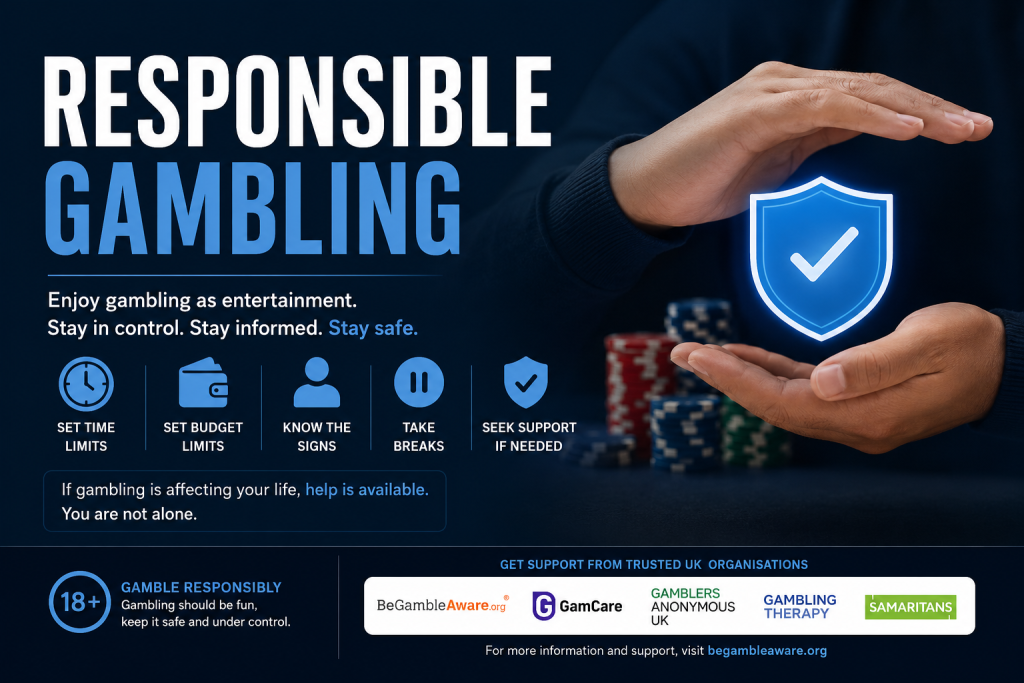
Recognising When Gambling Becomes a Problem
The transition from recreational gambling to harmful gambling is rarely sudden. It tends to be gradual, often invisible to the person experiencing it, and frequently masked by rationalisations that feel entirely plausible in the moment. Recognising the warning signs early is one of the most important steps anyone can take.
Below are behavioural and emotional indicators that gambling may be becoming problematic. These are not diagnostic criteria but general signals that something may need attention:
- Spending increasing amounts of time thinking about gambling, even when not actively playing
- Needing to gamble with larger sums to achieve the same level of excitement
- Feeling restless, irritable, or anxious when attempting to cut down or stop
- Repeatedly returning to gambling after losing money in an effort to break even
- Lying to family members, employers, or friends about how much time or money you spend gambling
- Borrowing money, selling possessions, or accessing credit to fund gambling
- Neglecting work responsibilities, family commitments, or personal health because of gambling
- Using gambling as a way to escape from stress, depression, anxiety, or difficult emotions
- Continuing to gamble despite clear negative consequences — financial, relational, or professional
- Feeling shame, guilt, or regret after a gambling session, yet returning shortly after
If you recognise three or more of the above in your own behaviour, we strongly encourage you to speak with a professional. The support organisations listed throughout this page can provide confidential guidance without judgement.
The Real Cost: Emotional and Financial Consequences of Gambling Addiction
Gambling addiction carries costs that extend far beyond the monetary. While financial damage is often what first becomes visible — depleted savings accounts, unmanageable debt, missed rent or mortgage payments — the emotional and relational toll is frequently just as devastating, and sometimes more so.
Financially, problem gambling can result in significant debt accumulated through credit cards, personal loans, payday lenders, or money borrowed from family. Bankruptcy is not uncommon among individuals who do not receive support early. The stress of hidden debt can itself trigger further gambling, creating a feedback loop that becomes increasingly difficult to escape.
Emotionally, gambling addiction is closely associated with depression, anxiety, and in severe cases, suicidal ideation. The shame cycle — gambling to feel better, losing, feeling worse, gambling again — can trap individuals for years without intervention. Relationships with partners, children, parents, and friends are frequently damaged or destroyed. Trust, once lost, takes considerable time and effort to rebuild even after gambling behaviour has stopped.
Employment consequences are also common. Reduced productivity, unexplained absences, and in some cases misuse of workplace funds can put careers at risk. It is worth acknowledging that the consequences of gambling disorder are serious and wide-reaching — not to cause alarm, but because honest awareness is the starting point for meaningful change.
Building Healthier Gambling Habits: A Practical Framework
For those who wish to continue gambling recreationally whilst reducing their risk, there are well-established practical strategies that can make a meaningful difference. These are not guarantees against harm, but they represent the kind of conscious, structured approach that characterises genuinely recreational gambling.
Set a fixed session budget. Decide in advance exactly how much money you are willing to spend in a single session. Treat this as the cost of your entertainment — the same as a cinema ticket or a meal out. Once the budget is spent, the session ends. Never top up mid-session.
Apply a time limit. Decide how long you will gamble before you start. Use an alarm or phone timer to enforce this. Time can pass very quickly when you are engaged with an activity you enjoy, and an external reminder helps counteract this.
Never gamble under the influence. Alcohol and recreational drugs impair judgement and reduce inhibition, which makes it significantly harder to stick to your limits. Gambling while impaired is associated with higher losses and riskier decisions.
Keep a gambling diary. Recording your wins, losses, time spent, and emotional state before and after each session creates visibility that would otherwise not exist. Many people are surprised by the actual figures when they write them down.
Take regular breaks. Step away from the screen every 20–30 minutes. This interrupts the focused engagement that makes it harder to assess whether your session is going the way you intended.
Diversify your leisure activities. Problem gambling often intensifies when gambling is someone’s primary source of entertainment or social connection. Maintaining a broad range of hobbies and social outlets reduces the psychological weight placed on gambling to deliver satisfaction.
Financial Control and Managing Your Gambling Budget
Financial management is one of the most concrete ways to limit gambling-related harm. It requires honesty about your current financial situation and a willingness to impose structures that may feel uncomfortable at first but ultimately provide significant protection.
Before you gamble, ask yourself the following questions honestly:
- Does this money come from disposable income, or is it earmarked for bills, rent, food, or savings?
- Would losing this money cause me genuine financial difficulty?
- Am I gambling to supplement my income, or purely for entertainment?
- Have I gambled with money I couldn’t afford to lose in the past month?
If any of these questions give you pause, it is worth reconsidering whether gambling is appropriate for you right now. Financial stress and gambling rarely mix well, and trying to “win your way out” of a difficult financial situation is almost never successful.
Practically speaking, consider setting up a dedicated account for gambling entertainment funds, entirely separate from your main finances. Deposit only what you are prepared to lose entirely. Never connect gambling platforms to credit cards, overdraft facilities, or savings accounts. Many UK banks now offer the ability to block gambling transactions at the account level — a powerful tool we describe in detail in a dedicated section below.
| Gambling Budget Principle | Why It Matters |
|---|---|
| Only gamble with disposable income | Protects essential living costs and reduces financial stress |
| Set a hard session loss limit | Prevents escalating losses beyond what you planned |
| Never gamble on credit | Debt-funded gambling dramatically increases harm potential |
| Track wins and losses over time | Provides an honest picture of your gambling expenditure |
| Separate gambling funds from daily accounts | Creates a psychological and practical boundary |
Self-Exclusion in the UK: How GAMSTOP and Other Tools Work
Self-exclusion is one of the most effective harm-reduction tools available to UK gamblers. It allows you to voluntarily ban yourself from gambling platforms for a defined period, removing the temptation to gamble during times of vulnerability and giving you the space to address underlying issues without being exposed to further risk.
The UK’s national self-exclusion scheme is administered by GAMSTOP, a free service that allows you to register once and be excluded from all UKGC-licensed online gambling websites and apps simultaneously. Exclusions can be set for periods of six months, one year, or five years, and once registered, they cannot be removed before the minimum period expires. This friction is deliberate — it ensures that a moment of resolve provides lasting protection.
GAMSTOP covers the licensed online sector comprehensively, but it does not cover unlicensed operators, betting exchanges not regulated in the UK, or land-based gambling venues. For land-based exclusion, you must register directly with individual venues or through local authority schemes. The UK Gambling Commission website provides guidance on how to access these programmes.
Self-exclusion works best when combined with other tools. Telling a trusted family member about your exclusion, removing gambling apps from your devices, and seeking professional support simultaneously all significantly improve long-term outcomes. Self-exclusion is a starting point, not a complete solution in isolation.
Gambling Blocking Software: An Extra Layer of Protection
Even after self-exclusion, determined individuals may find ways to circumvent restrictions, particularly online. Gambling blocking software addresses this by operating at the device or network level, making gambling websites technically inaccessible regardless of how they are approached.
Several reputable products are available to UK users:
- Gamban — Blocks thousands of gambling websites and apps across all your devices. A single subscription covers multiple devices and provides comprehensive coverage at the software level.
- BetBlocker — A free, independent charity-run tool that blocks access to gambling sites on your devices. Particularly suitable for those who want a no-cost solution.
- GamBlock — One of the longest-standing blocking tools, offering persistent protection that cannot easily be removed even by the user during the exclusion period. Particularly effective for individuals who are prone to circumventing other controls.
Using blocking software alongside GAMSTOP self-exclusion creates a substantially stronger barrier than either measure alone. We recommend discussing which combination is most appropriate with a gambling support worker, who can advise based on your specific circumstances and the devices you use.
UK Bank Gambling Transaction Blocks
In recent years, most major UK banks and financial providers have introduced the ability to block gambling transactions at the account level. This is a significant development in consumer harm prevention, and it is both free and simple to activate through most banking apps or by calling your bank directly.
When a gambling block is active, your debit card and bank transfers will be declined when used at gambling merchants. This covers online casinos, betting sites, poker rooms, and in many cases bookmakers. It does not typically affect ATM withdrawals, which means physical cash gambling at land-based venues remains a consideration.
The following major UK banks currently offer this feature:
| Bank / Provider | How to Activate |
|---|---|
| Barclays | Barclays app → Card controls → Gambling |
| HSBC | Online banking or branch request |
| Lloyds / Halifax / Bank of Scotland | Internet banking or calling customer services |
| NatWest / RBS | NatWest app → Spending controls |
| Monzo | App → Account → Gambling block |
| Starling Bank | App → Spending spaces → Block gambling |
| Revolut | App → Security → Gambling transactions |
We strongly encourage anyone who is concerned about their gambling spending to activate this feature. It takes under two minutes on most banking apps and provides an immediate, practical barrier. Removal of the block is also possible, but many banks apply a cooling-off period — giving you time to reconsider before full access is restored.
The Emotional Side of Gambling: Wellbeing and Mental Health
Gambling and emotional wellbeing are deeply intertwined. For many people, gambling begins as an enjoyable activity, but over time it can become a way of managing emotions — a source of excitement when life feels dull, a distraction when anxious, or a temporary relief from feelings of depression or worthlessness. This is referred to as escape gambling, and it is among the most psychologically complex forms of gambling-related harm.
When gambling is being used to regulate emotions rather than for entertainment, the risks increase substantially. Wins feel like validation and relief; losses trigger shame, self-recrimination, and a desire to repair those feelings quickly — often by gambling again. This cycle can become deeply entrenched without formal support.
Recognising the emotional role gambling plays in your life is an important step. Ask yourself honestly: do you gamble more when you are stressed, lonely, bored, or upset? Do you feel a sense of relief or escape when you start a session? Does losing affect your mood for hours or days? If so, it may be worth exploring these patterns with a counsellor or therapist who specialises in addiction or behavioural issues. Free counselling and support for gambling-related emotional harm is available through dedicated UK organisations — see our professional help section below for full details.
Broader mental health support is also available around the clock for anyone in emotional distress — the Samaritans operate a free, confidential listening line on 116 123, available 24 hours a day, 365 days a year. If gambling-related distress is acute, please do not hesitate to call.
Support for Family Members and Close Friends
Gambling addiction is rarely an isolated experience. The people closest to someone with a gambling problem — partners, parents, children, siblings, close friends — are frequently profoundly affected. They may experience anxiety, financial pressure, broken trust, and emotional exhaustion. In many cases, they spend years trying to help someone who does not yet recognise the problem themselves.
If someone you care about is showing signs of a gambling problem, it is important to approach the situation with compassion rather than confrontation. Shame rarely helps; it typically drives the behaviour further underground. Instead, focus on expressing concern from a place of care, being consistent in refusing to cover gambling debts, and maintaining your own boundaries around money and time.
You do not have to navigate this alone. Dedicated support for families and friends of people affected by gambling is available through several UK organisations — including peer-support groups for affected others, free online counselling, and confidential helplines that do not require the gambler themselves to be involved. Full details of these services can be found in our professional help section below, where each resource is described alongside the type of support it offers.
Looking after yourself during this period is not selfish — it is necessary. Family members who are supported tend to be more effective in their efforts to help and less likely to experience lasting harm themselves.
Protecting Children and Vulnerable Individuals
Under UK law, all gambling activities are restricted to adults aged 18 and over. This is a fundamental safeguard, and one that is taken seriously by both licensed operators and by our platform. We do not produce content that is directed at minors, and we do not promote gambling in ways designed to appeal to under-18s.
However, even with these safeguards in place, children can sometimes gain access to online gambling platforms — particularly in households where devices are shared. If you share a computer, tablet, or smartphone with younger family members, we strongly recommend installing parental control software that blocks gambling-related content. NetNanny and similar tools allow you to apply category-level blocks across a device, regardless of which user is logged in.
Vulnerability extends beyond age. People experiencing mental health difficulties, financial crisis, bereavement, or substance dependency may be at heightened risk of gambling-related harm, even if they have gambled recreationally for many years without issue. If you believe that your current circumstances make you particularly vulnerable, we encourage you to pause gambling activity and speak with your GP or a specialist support service. The BigDeal service offers targeted support for young people and those transitioning into adulthood who may be at particular risk.
Operators licensed by the UK Gambling Commission are legally required to have systems in place to identify and interact with customers who show signs of vulnerability. If you feel that an operator has failed in this duty, you can report this to the UKGC directly through their website.
Where to Get Professional Help in the UK
Seeking help for a gambling problem is a sign of strength, not weakness. The UK has a well-developed network of specialist services — some NHS-funded, some charitable — that provide everything from telephone counselling to residential treatment. Below is a structured overview of what is available and who each service is best suited to.
National helplines and online support:
- BeGambleAware — National helpline available 24/7, live chat, self-assessment tools, and a directory of local treatment services. Call 0808 8020 133 (free).
- GamCare — Provides the National Gambling Helpline, free counselling, and structured treatment programmes. Call 0808 8020 133.
- Gambling Therapy — International but UK-based online support including real-time chat, forums, and a recovery toolkit.
Specialist NHS and clinical services:
- National Problem Gambling Clinic — The UK’s first and most established NHS gambling clinic, offering comprehensive assessment and treatment for adults in England.
- NHS Northern Gambling Service — Free specialist treatment for adults living in the North of England, offered both in person and remotely.
- NHS Southern Gambling Service — Provides free gambling treatment for adults across the South of England.
- West Midlands Gambling Harm Clinic — Regional specialist service providing assessment, therapy, and support coordination in the Midlands.
Residential and intensive support:
- Gordon Moody — Provides residential treatment for those with severe gambling addiction, alongside therapeutic communities and online recovery support. One of the most intensive and well-regarded services in the UK.
- Gamblers Anonymous UK — Peer-led support groups operating across the UK, offering community, accountability, and a structured recovery pathway.
Your GP is also a valuable first point of contact. They can refer you to NHS services, discuss medication options where relevant, and provide letters of support for financial hardship applications if gambling-related debt is a factor.
Emergency Support and Crisis Resources
If you are experiencing a gambling-related crisis — whether that means acute financial distress, thoughts of self-harm, or a mental health emergency — please reach out for help immediately. You do not need to be at rock bottom to deserve support, and you do not need to have all the answers before making a call.
- Samaritans — Available 24 hours a day, 7 days a week on 116 123 (free). Confidential listening support for anyone in emotional distress.
- NHS 111 — If you are in England and need urgent medical or mental health support that is not a life-threatening emergency, call 111.
- 999 — If you or someone else is in immediate danger, call the emergency services without delay.
- National Gambling Helpline — 0808 8020 133 (free, 24/7) — Operated by GamCare in partnership with BeGambleAware, this line provides immediate gambling-specific crisis support.
There is no shame in reaching out in a moment of crisis. The people who staff these services are trained to listen without judgement and to help you find a path forward. Please use them.
How We Approach Safer Gambling as an Affiliate Platform
Our platform publishes reviews of online casinos, slot games, payment methods, bonuses, and gambling guides. Some of the links within our content are affiliate links — meaning we may receive a commission if a reader registers with a casino we have reviewed. This does not influence the factual accuracy of our reviews, our responsible gambling content, or our editorial independence.
We are not a gambling operator. We do not host casino games, accept player deposits, or provide any gambling services. All reviews, comparisons, and recommendations on our platform are informational in nature, intended to help adults in the UK make more informed decisions about where and how they gamble. You can read more about who we are on our About page.
We are committed to ensuring that our content aligns with the safer gambling standards supported by the UK Gambling Commission and the National Responsible Gambling Strategy. This includes not targeting vulnerable individuals, not presenting gambling as a solution to financial difficulty, and always including age-restriction and responsible gambling messaging where relevant.
Our Terms & Conditions and Privacy Policy provide further detail on how we operate, how your data is handled, and what obligations both we and you have when using this platform. If you have questions about our content policies or our approach to responsible gambling, please visit our FAQ page or contact us directly.
Frequently Asked Questions About Responsible Gambling
Is gambling ever genuinely safe?
For most adults, recreational gambling — done within clearly defined financial and time limits — carries manageable risk. However, there is no threshold below which gambling is entirely without risk for every individual. People with a family history of addiction, current mental health challenges, or significant financial stress face elevated risk. Safety in gambling is relative and personal, not universal.
How do I know if I have a gambling problem rather than just a bad run of luck?
The key distinction is behavioural and emotional, not financial. A bad run of luck ends, and the person moves on without significant behavioural change. A gambling problem is characterised by continued gambling despite clear negative consequences, the inability to stop when intended, and emotional dependency on the activity. If you find yourself justifying continued play despite losses, hiding your gambling, or feeling that you cannot stop, these are signs that go beyond ordinary bad luck.
Can I self-exclude from just one or two casinos, or does GAMSTOP cover everything?
GAMSTOP registers you for exclusion across all UK Gambling Commission licensed online gambling sites simultaneously. You cannot select individual operators — it is an all-or-nothing scheme, which is intentional. If you only want to exclude from specific sites, you can do so directly with individual operators, but GAMSTOP’s comprehensive approach provides much stronger protection against relapse.
Will my bank block all types of gambling if I activate the gambling transaction block?
Bank gambling blocks typically cover online gambling transactions made via debit card or bank transfer. They will block most licensed online casinos, sports betting, and poker platforms. However, they generally do not block ATM cash withdrawals, which can still be used at physical betting shops or casinos. The block is an important layer of protection, but it works best when combined with other tools such as GAMSTOP and blocking software.
Is the support available from organisations like GamCare and BeGambleAware genuinely free?
Yes. The National Gambling Helpline (operated by GamCare and funded partly through BeGambleAware) is entirely free to call. Most counselling services offered by GamCare, Gambling Therapy, and BeGambleAware are available at no charge. NHS services such as the National Problem Gambling Clinic are also free at the point of use for eligible UK residents. Gordon Moody’s residential programmes may involve funding discussions, but no one is turned away on the basis of inability to pay.
What should I do if someone I live with has a gambling problem but refuses to get help?
This is one of the most difficult situations families face. You cannot force someone to seek help, but you can protect yourself and create conditions that make continued harmful gambling harder. Removing access to shared finances, refusing to repay gambling debts, and reaching out to Gam-Anon (run by Gamblers Anonymous) for peer support are all constructive steps. GamCare also offers counselling for affected family members regardless of whether the gambler themselves is seeking help.
Does this website endorse specific gambling operators?
We review and compare online casinos and gambling products, but we do not endorse specific operators in the sense of guaranteeing their quality or suitability for you. All operators we cover must be licensed by the UK Gambling Commission. Our reviews represent our editorial assessment and are intended to inform, not to direct. Final decisions about where to gamble are always yours to make.
Get in Touch With Us
If you have questions about the information on this page, concerns about how our content is presented, or would like to raise a responsible gambling matter with our editorial team, we welcome your contact. Our team aims to respond to all responsible gambling queries within two working days.
- Email: [email protected]
- Contact page: https://memocasinouk.com/contacts/
If your enquiry relates to an urgent gambling-related crisis, please do not wait for our response. The National Gambling Helpline is available free of charge on 0808 8020 133 (24/7), and the Samaritans can be reached on 116 123 at any hour. Our contact details are for editorial and informational enquiries only — we are not a crisis support service.
For legal correspondence and formal written communications regarding this platform and its responsible gambling obligations, please direct all enquiries to the email address above and mark the subject line accordingly. Further details about our legal structure and editorial policies are available on our About page.